
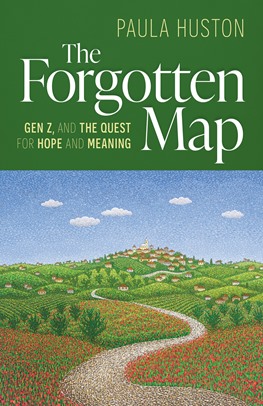
This essay is inspired by the author’s new book, “The Forgotten Map: Gen Z, and the Quest for Hope and Meaning” (Liturgical Press).
One of the more jaw-dropping statements I’ve ever heard came from the lips of a lifetime friend, an OB-GYN who, before she retired in her 70s, must have personally ushered thousands of babies into the world. Yet when I naively asked her what that had been like, she gave a bitter laugh. “There’s a point you figure out it’s pointless.”
I stared at her.
“Well, think about it. You keep on delivering them, one after another, and what do they do? They grow up and get old and die.”
What causes a person to become this cynical? Sometimes, it’s sheer disappointment; no matter how hard they work, nothing ever seems to pan out. Sometimes, it comes from trusting someone who then abused that trust, and they’re never going to let that happen again. And sometimes it comes with the realization that, no matter how strong or brave or powerful they think they are, they can neither conquer evil nor save the world from suffering. I suspect that in the case of my hard-driving, high-achieving, brilliant doctor friend, it was accumulated frustration over the rare but inevitable delivery room tragedies she could not prevent that brought her to this bitter place.
Sadly, many of today’s teenagers and young adults are on the same page. Research by the 2025 Society for Risk Analysis Conference says that rising crime, climate change, the loss of rights they could once count on, racial discrimination and school shootings weigh heavily on this cohort. Their frustration with those in power positions who refuse to act has led to their becoming “more negative, cynical and scared.” Where generations before them might have taken to the streets in protest, many Gen Zers have become so “cynical about their ability to change the world” that they’ve lost any hope for the future.[1]
Underneath the sarcasm [of Gen Z] is disguised grief. Many Gen Zers are keenly aware of and wounded by the affliction and anguish of strangers in faraway places.
In her 2022 essay for Public Discourse, Gen Z writer Katerina Levinson describes what this contagion of cynicism looks like from the inside: “We young people are jaded. Our memes and social media posts reflect our dark and sarcastic sense of humor.” But underneath the sarcasm is disguised grief. Many Gen Zers are keenly aware of and wounded by the affliction and anguish of strangers in faraway places. “We feel to have hope in a world teeming with oppression and suffering would be to transgress against our neighbors and their pain,” so in “an act of solidarity with victims of all kinds, we adopt the posture of despair. It seems that our only option is to choose to believe that the world is not fundamentally good.”[2]
No wonder, then, that my doctor friend and many Gen Zers find Christianity — whose primary virtues are faith, hope and love — naïve and irrelevant. Despite the recent uptick in church attendance by young men, nearly one-fifth of Gen Zers declare themselves atheists or agnostics, and over a third claim no religious affiliation whatsoever. To those who have lost all hope, religious faith in the essential goodness and beauty of a world created by a loving God is worse than naïve; it’s absurd.
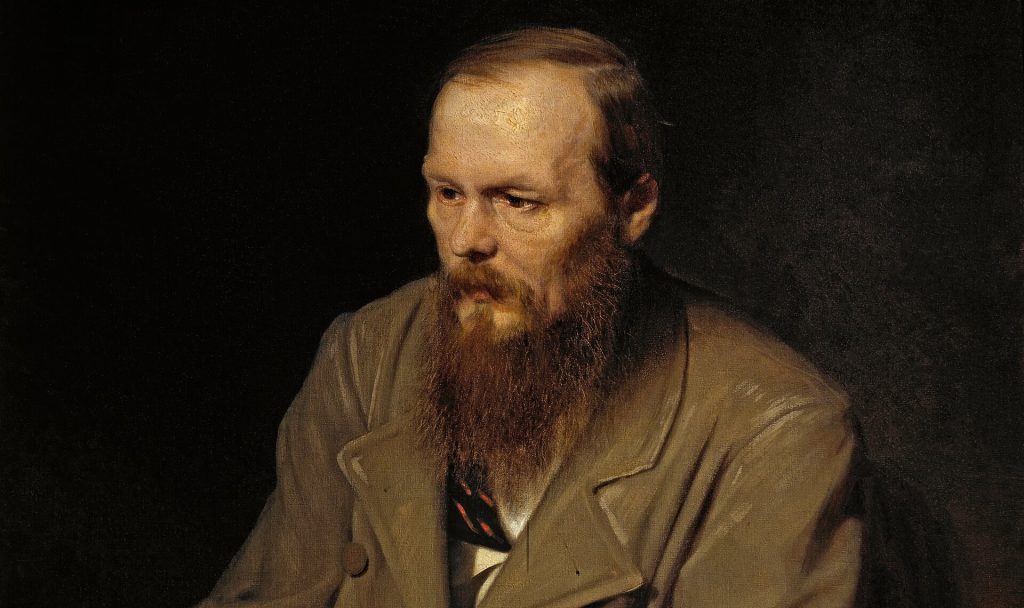
The great Russian novelist Fyodor Dostoevsky experienced the destructive power of cynicism firsthand. As a young boy spending the summers on his father’s small estate, he became painfully aware of the sufferings of Russia’s oppressed peasants. In his early 20s, he learned about the entrenched feudal system that kept them in serfdom and — despite his upbringing in a devout Russian Orthodox household — was drawn to secular socialist idealism. At 28, he was arrested for associating with a group accused of reading books critical of the Tsar, who was loyally supported by the church. He was incarcerated in the Peter and Paul Fortress and scheduled for execution. Dragged out to be shot before being granted a last-minute commutation, he was instead sent to a Siberian prison camp for four years of penal servitude.
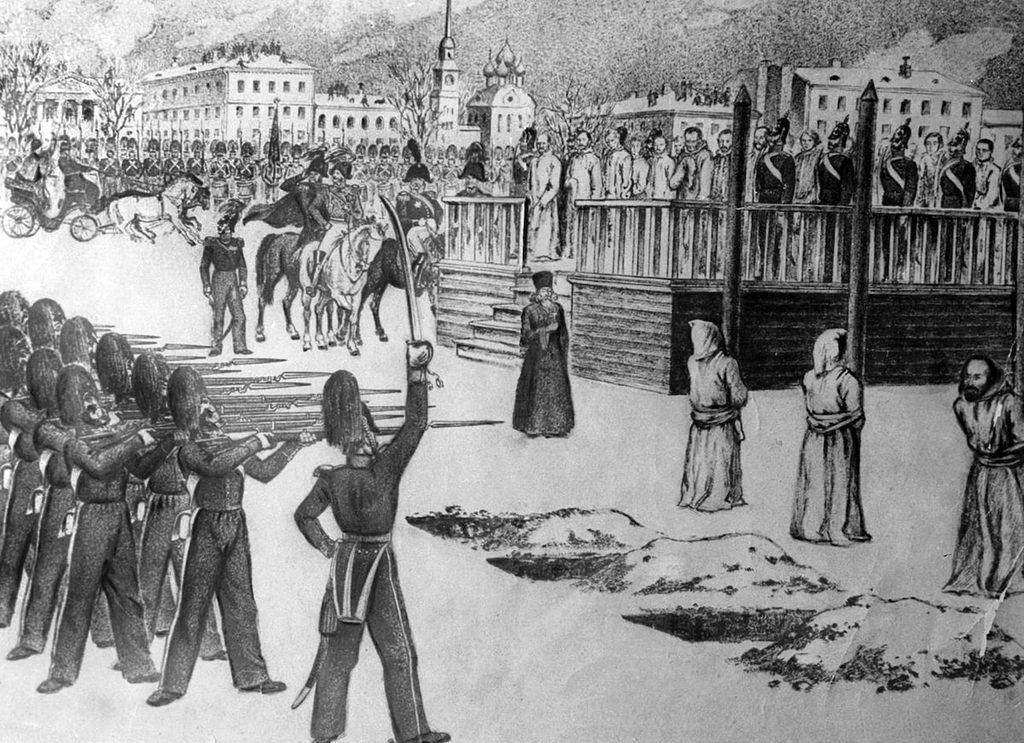
The experience was gruesome. When he was finally released in 1854 after what he called a time of “burial alive” and of “torture unbearable and unutterable,” he’d become totally disillusioned with the utopian ideals of socialism.[3] The following years of compulsory military service, severe poverty complicated by an intractable gambling addiction, an unhappy first marriage, and the recurring epileptic seizures that began when he was 17 completed his transition from romantic idealist to cynic.
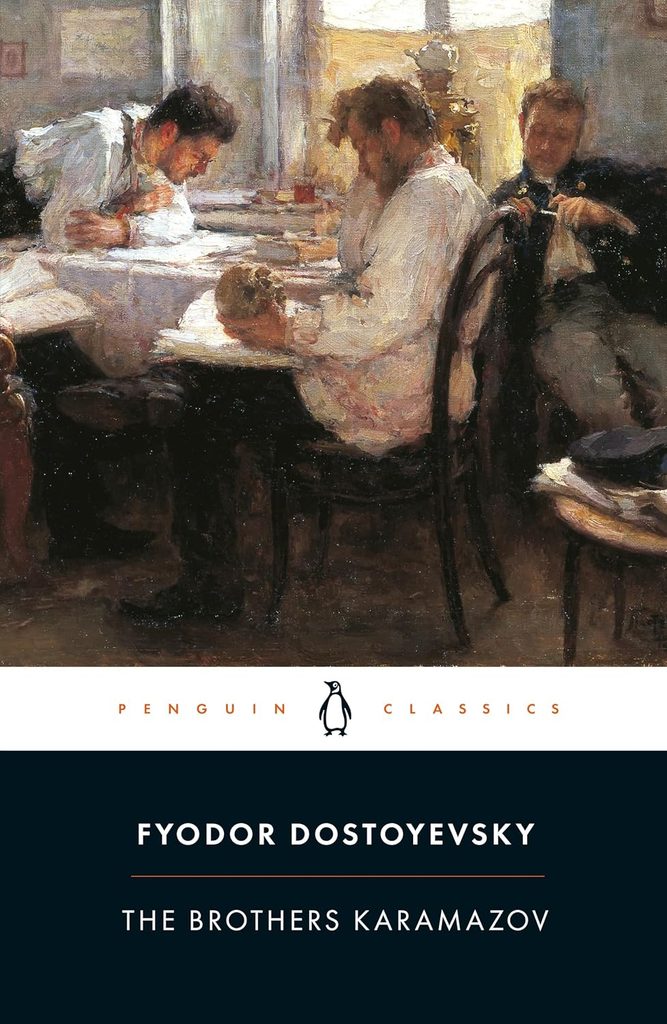
Yet despite the church’s ties with the Tsar who’d shipped him off to Siberian hell, he never stopped thinking of himself as a Christian. And at some level he understood that cynicism is the antithesis of faith. In the end, he knew, we must choose between hope and despair. His last and most famous work, “The Brothers Karamazov,” focuses on three characters caught between these poles of darkness and light: oldest brother Dimitri, the impulsive romantic who worships physical beauty; middle brother Ivan, the sophisticated cynic who turns all of life into an unsolvable intellectual problem; and youngest brother Aloysha, the humble believer whose open heart makes him vulnerable to grief and suffering but also blesses him with limitless love for one and all, including his troubled brothers.
Before he could complete his masterpiece, Dostoevsky had to live through yet another period of intense suffering. In April of 1878, he began writing “The Brothers”in a small flat in St. Petersburg where he lived with his second wife, Anna, and their young children. On May 16, their 3-year-old son Alyosha underwent a prolonged epileptic seizure like the ones his father had suffered since he was a teenager. The child did not survive, and the grief was overwhelming. Anna wrote in her reminiscences about the devastating effect of the little boy’s death on her husband: “He had especially loved little Alyosha with an almost unhealthy love, as if he felt he would soon be deprived of him. … I greatly feared the holding in of his deep grief would fatally affect his already shaky health.”[4] When they were visited by a close friend who had often talked about making a pilgrimage to a famous monastery called Optina Pustyn, Anna begged him to take her husband with him, in part because she was going through her own private agony and was incapable of helping him herself.
The death of my dear son had had a terrible effect on me. I was so distracted and sad and wept so much that no one could recognize me. My usual joy in living had disappeared as had my usual energy, which had been replaced in apathy. I became cold toward everything: toward the housework, my affairs and even toward my own children. I lived in memories of the past three years.[5]
Dostoevsky was as worried about his wife as she was about him. Determined to find help for both of them, he set off for Optina Pustyn. There, Anna recorded, he spoke with a starets (holy elder) called Amvrosy three times, “once in a crowd, among the people, and twice in private. The starets’s conversations left a deep and penetrating impression upon him. … It was evident what a knower-of-hearts and clairvoyant was this starets who was respected by all.”[6] When Dostoevsky returned home, he was “pacified and significantly calmed.” He also had a message for her from Starets Amvrosy, words that he used, almost verbatim, in “The Brothers.”
In “The Brothers Karamazov,” Fr. Zosima might easily be talking to a generation 150 years in the future — Gen Z, and its overwhelming struggles with the evils of its time.
In a chapter called “Women of Great Faith,” a distraught peasant woman seeks counsel from Fr. Zosima, the fictional elder based on the real-life Amvrosy. She explains that her little boy has died and she cannot stop seeing him everywhere:
“It’s like he’s standing here right in front of my eyes, and never leaves me. My heart has shriveled up. Just looking at his little shirt or tiny shoes starts me wailing. I put out his things that are left, all of them, and I look at them and wail. … I’ve been away from home more than two months. I’ve forgotten everything. I don’t want to remember, for how will I live with [my husband] now? No, I’m through with him, with everybody. I don’t want to set eyes on our house anymore or on our things, don’t want to see any of it again.”[7]
Starets Zosima responds:
“[Y]ou are like Rachel in the Bible, weeping for her children and refusing to be comforted because they were no more. Such is the lot of mothers on earth. So do not be comforted — there is no need. Weep, but every time you do, remember that your little son is one of God’s angels, that he is looking down on you from where he is now, that he sees you and rejoices in your tears and shows them to God. You will shed a mother’s tears for a long time to come, but in the end your weeping will turn into quiet joy, which will cleanse your heart.”[8]
Dostoevsky’s great revelation near the end of his own extremely difficult life is that there are levels of suffering so deep no comfort is possible. They must simply be endured. What is alwayspossible is hope. Perhaps Dostoevsky intuited that someday long after his death at 59 a generation of young people would be facing the same choice he’d faced: whether to become a despairing cynic or to live in hope. In “The Brothers Karamazov,” Fr. Zosima might easily be talking to a generation 150 years in the future — Gen Z, and its overwhelming struggles with the evils of its time:
“Brothers, do not fear man’s sins. Love man in his sin too, for such love resembles God’s love, the highest possible form of love on earth. Love God’s creation, love every atom of it separately and also as a whole; love every green leaf, every ray of God’s light; love the animals and the plants and love every inanimate object. If you come to love all things, you will perceive God’s mystery inherent in all things; once you have perceived it, you will understand it better and better every day. And finally you will love the whole world with a total, universal love.”[9]
If only you can do this, adds Fr. Zosima, then everything is possible — even joy:
“My friends, pray to God for joy. Be joyful like children, like the birds. Do not be discouraged in your efforts by men’s sins; do not fear they will obliterate your work and prevent its fulfillment; do not say, ‘Sin, wickedness, and bad environment are too much for us—we are alone and helpless against them, and the surrounding evil will not allow us to accomplish our good works.’ Rid yourselves of that despair, children! There is one way for you to overcome these obstacles: take firm hold of yourselves and make yourselves answerable for all men’s sins.”[10]
What does it mean to become “answerable for all men’s sins”? Believing ourselves to be good while the rest of humanity is wicked — a common temptation among morally outraged young activists — can only lead to bitter resentment and a sense of futility. Instead, we must stop viewing ourselves as detached judges of others and recognize that we, too, are sinners in need of love and mercy.
What we cannot change, we can love, and when we love, we regain our capacity for hope.
If Gen Z’s “posture of despair” truly is rooted in a genuine but frustrated empathy for the suffering of the world, as writer Katerina Levinson believes it is, then Dostoevsky’s revelation about the source of true brotherhood — the acknowledgment that we too are sinners — might offer hope for young people who’ve given up on trying to change things for the better. What we cannot change, we can love, and when we love, we regain our capacity for hope.
I wish my doctor friend could go back to the moment, whenever it was, that she knew without doubt what her vocation would be. When she knew that her life would be best spent bringing baby after baby — the healthy and the sick, the strong and the weak, the lovely and the misshapen — into this beautiful world.
When she still believed that every birth, even the ones that ended in terrible, wailing grief, was a miracle of hope.
Citations
[1] Society for Risk Analysis, ed. Sadie Harley, rev. by Robert Egan, “Gen Z Views World as ‘Scary Place’ with Growing Cynicism About Ability to Create Change, Research Suggests,” Phys.org, December 10, 2025, https://phys.org/news/2025-12-gen-views-world-scary-cynicism.html.
[2] Levinson, Katerina. “Youthful Cynicism and Dostoevsky’s Case for Hope” Public Discourse: The Journal of the Witherspoon Institute, Feb. 14, 2022.
[3] Dostoevsky, Fyodor. “Notes from the Underground,” Literature of the Western World: Neoclassicism Through the Modern Period, vol. II, ed. James Hurt and Brian Wilkie, 5th ed. (Pearson, 1996), 1006.
[4] Dunlop, John B. Staretz Amvrosy: Model for Dostoevsky’s Staretz Zossima (Belmont: Nordland, 1972), 59.
[5] Ibid, 59.
[6] Ibid, 60.
[7] Dostoevsky, Fyodor. The Brothers Karamazov, translated by Andrew H. MacAndrew (New York: Bantam, 1970), 56.
[8] Ibid, 57.
[9] Ibid, 385.
[10] Ibid, 387.