


During the COVID-19 pandemic, I jumped at the chance to spend time with my 7-year-old granddaughter Teagan by helping her with her homework via Zoom. Her Catholic elementary school in California had just closed its doors, and all teaching was now online. Because I hold a graduate degree in theology and ministry from Seattle University, it was a natural fit for me to help with her religion homework. Working with the first-grade curriculum, however, it soon became obvious to me that there was so much more I wanted Teagan to know about God. More than learning beliefs about God, I wanted to introduce Teagan to an intimate, immediate and ever-present divine presence that she could experience.
Children are natural-born mystics and contemplatives filled with wonder, curiosity and imagination. Teagan was no exception. Whenever she visited me in Seattle, we would spend time in my yard on Lake Washington gathering little “offerings” of rocks, shells, flowers and other treasures. Teagan was eager to search for fairies in the hidden places in the garden, and we’d always pause to greet Grandmother Willow — an old (and very wise) willow tree that grew next to the lake. I delighted, as did Grandmother Willow, in Teagan’s eagerness to connect with the natural world, for I knew this sense of wonder was the gateway to experiencing divine presence.
Although they may not name it as such, children know God in a way that many adults have forgotten or never imagined. Many of us were taught a story of separation from God and our unworthiness. The image of God we are taught as children has a powerful and lasting effect on us. We take these stories and images into adulthood, where they shape our worldview and determine how and where we find meaning and purpose in life. Our God image also influences where we look for divine presence and, ultimately, where we find it.
In many ways the story we teach our children about God can be so much larger. Just as our understanding of the universe has expanded, we need a larger story about God and our relationship with the divine. What if we taught our children that God is in the air we breathe, everywhere and unseen, finding expression in all of creation — and most especially in and through human beings? What if we taught that God can be experienced in moments of stillness, in moments of sadness and joy, in our friends, and even in those people we find hard to love? What if we taught our children that each of them is a unique expression of God in the world and that they honor God by becoming themselves?
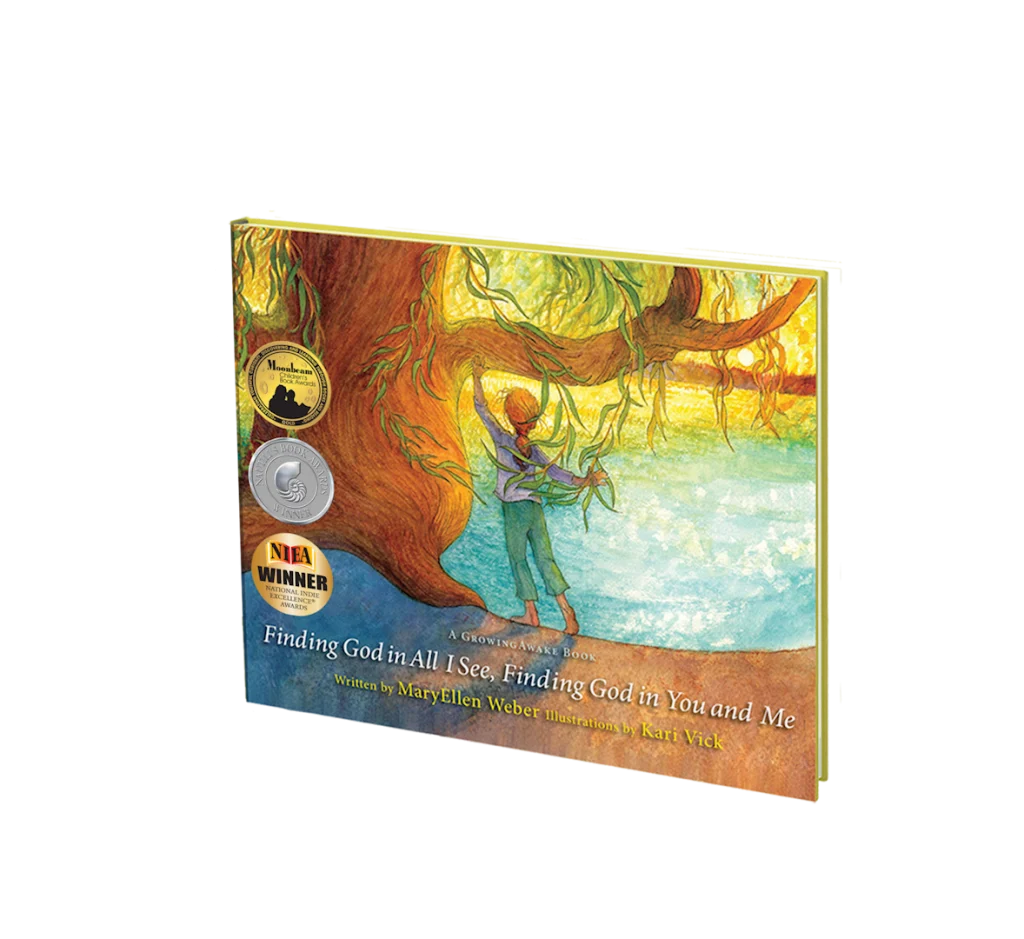
This desire to encourage an awareness of God in all things and all things in God was the impetus for writing my children’s book, “Finding God in All I See, Finding God in You and Me.” Yet it was only after publishing the book that I realized I wrote the book for adults as well as children. More than ever, we all need a bigger story — one that begins with our oneness with God and each other. A story that reminds us of the spark of God planted in our being. And a story that empowers us to carry that flame out into the world, creating a more just and inclusive society.
It is my belief that we are soaking in divine presence. We can never be separated from it, only asleep to it. It is my mission as a children’s book author to encourage children to find God in everyday experiences, to open fresh eyes to what is already here, and to awaken to divine presence within nature, within others and especially within themselves. If we can teach our children this, we will have taught them well.
Reflect: When you were a child, what did you think about God? Where did you think God lived? What did you think God was like? Where did you think you could find God? Chances are, you experienced God in many ways without realizing it, because the places you were taught to look for God were limited. What if someone in your life had taught you to find God everywhere and in everyone, including yourself?