Reflections on the Catholic Imagination and Speculative Storytelling Conference
The whole thing started because two nerds got together on a podcast.
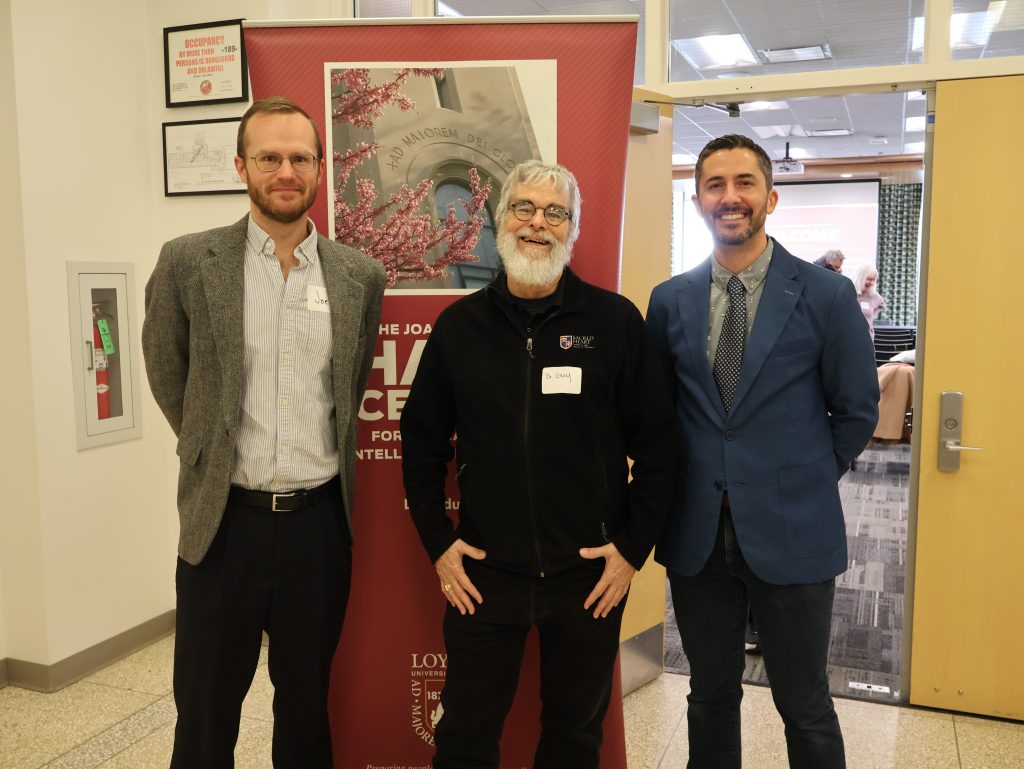
The two nerds in question were Dr. Joseph Vukov, associate director of the Hank Center for the Catholic Intellectual Heritage at Loyola University Chicago, and me, Eric Clayton. Joe was a guest on “AMDG: A Jesuit Podcast” in the fall of 2024. We got to talking about science fiction, fantasy, Catholic nerdom and more. It was awesome.
We left that conversation with two lingering questions: How can we keep talking about this stuff? And would anyone else want to join in?
From those seeds of friendship, an idea grew. We knew that our shared Catholic faith was foundational to how we engaged stories of fantasy, horror, science fiction and more. We knew, too, that conversations on the Catholic imagination — while quite impassioned when engaging authors like Flannery O’Connor and Walker Percy — often seemed to fall silent when wading into the water of speculative storytelling.
How could that be? The Catholic imagination is built on a sacramental understanding of the world: the stuff of this temporal plane necessarily points us beyond, to a world we cannot fully realize and yet are called to embody. Our imaginations hold the key to wrestling with a God beyond all knowing. What’s more fantastical, what’s more speculative than that? More importantly, how can God reach us, how can the Spirit work within us, if we aren’t priming the pump of the imagination — the very place in which questions of the fantastical and the speculative collide with our spiritual lives?
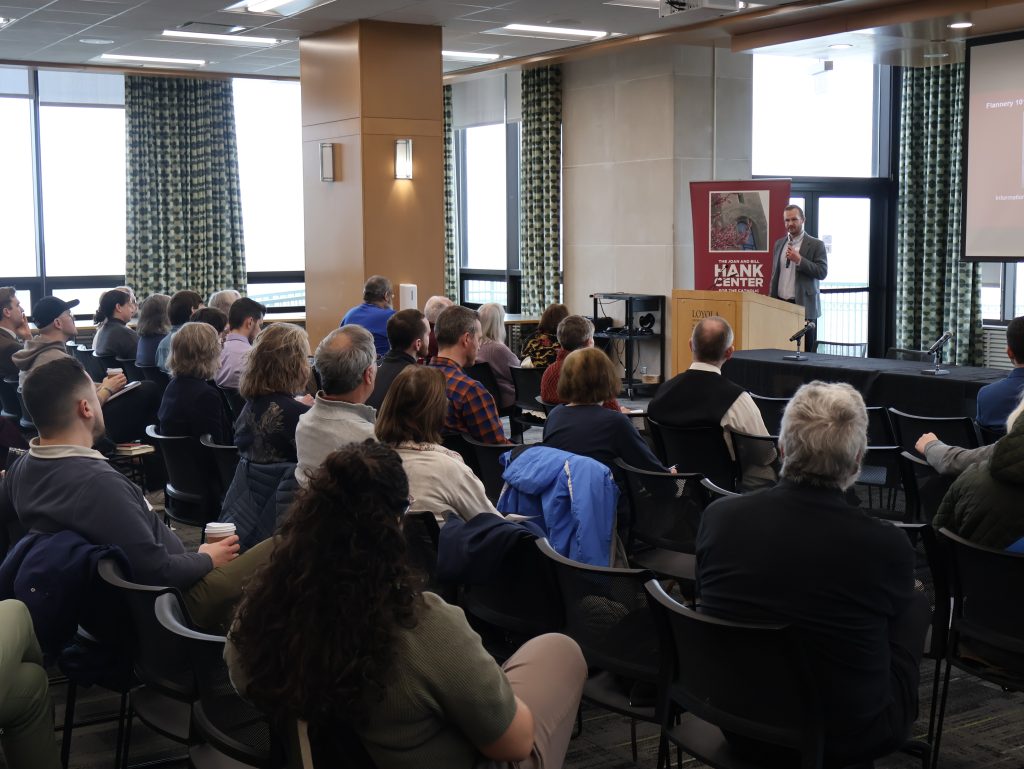
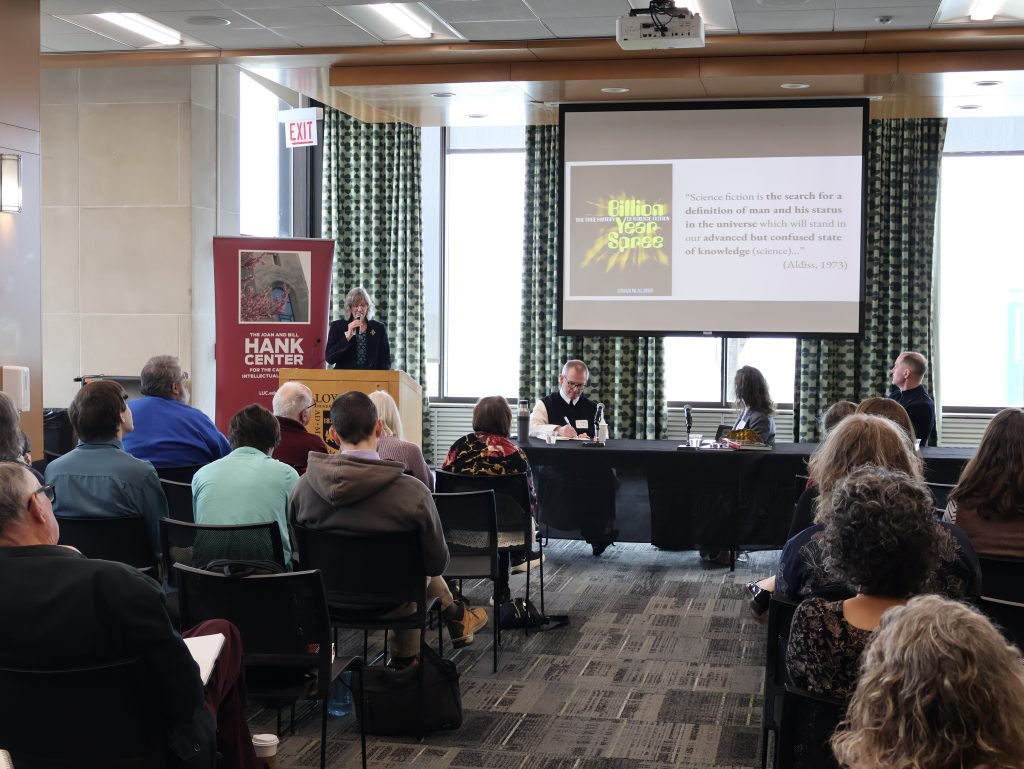
And so, Joe and I set out to find our people. The Jesuit Media Lab, in partnership with the Hank Center, sponsored a daylong conference in Chicago on March 14, 2026: “A Faith that Builds World: The Catholic Imagination in Speculative Storytelling.” We stacked the day with amazing speakers:
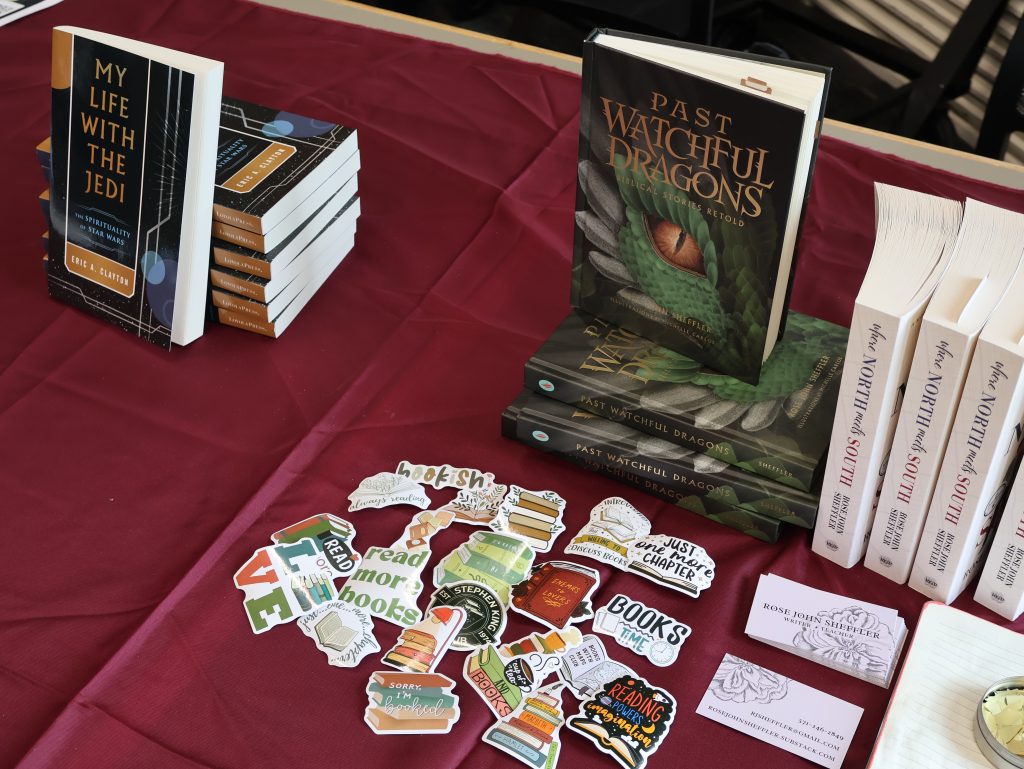
- Rose John Sheffler, author of “Past Watchful Dragons: Biblical Stories Retold,” reflected on what it takes to turn a biblical story into a dark fairy tale;
- Emily Strand, professor and director of campus ministry and liturgical music at Ohio Dominican University, taught us which robot stories to pair with Catholic social teaching to better understand our shared humanity;
- Susan Haarman, known for her research into how tabletop role-playing games can better form us for civic engagement, drew insightful parallels between the Dungeon Master and the spiritual director;
- Fr. Ryan Duns, SJ, author of “Theology of Horror: The Hidden Depths of Popular Films,” introduced us to a Christ figure who terrorizes us out of our complacent status quo;
- Fr. Stephen Gregg, a monk and priest of the Cistercian Abbey of Our Lady of Dallas, invited us to consider how fantastical motifs of the past can inform the present;
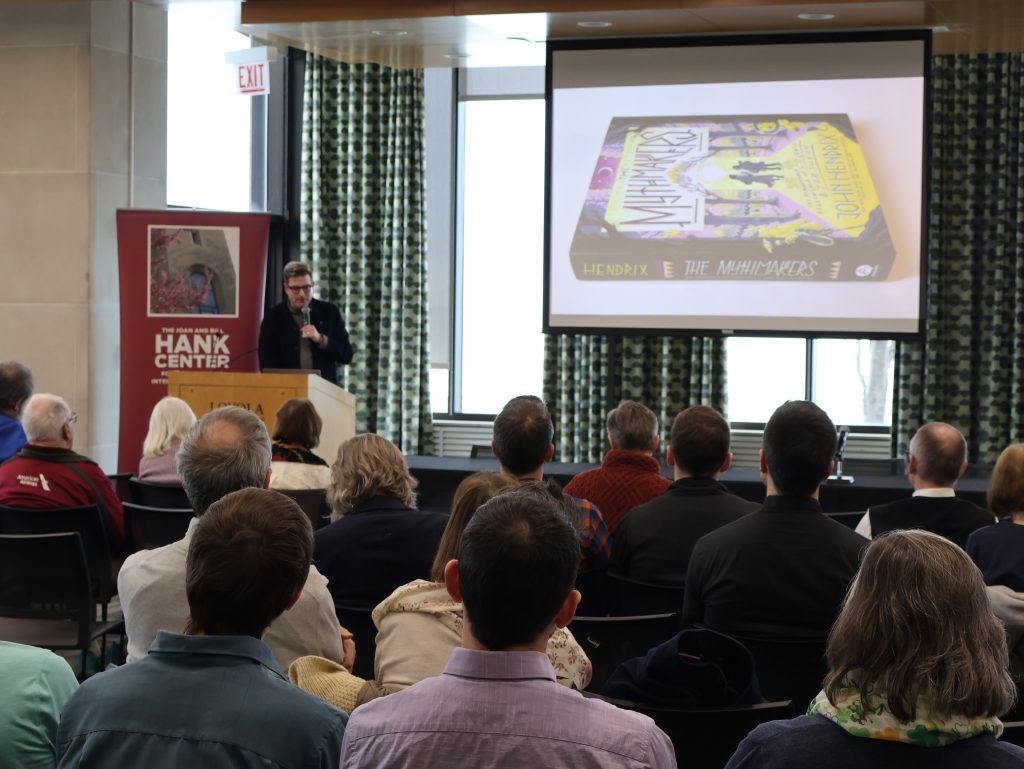
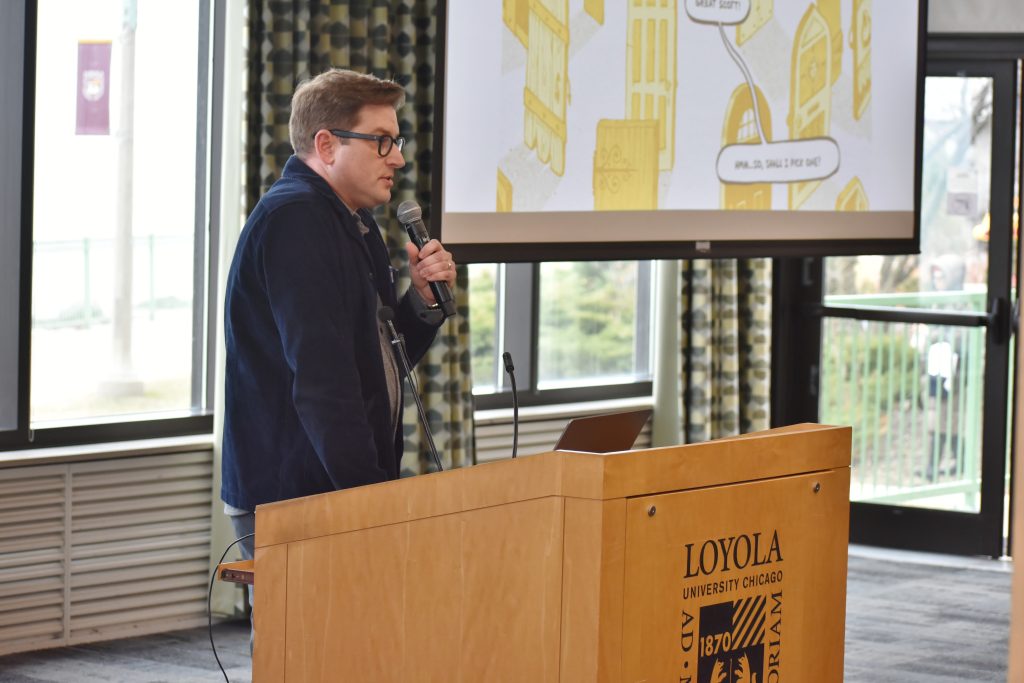
- John Hendrix, New York Times bestselling author and illustrator of “The Mythmakers: the Remarkable Fellowship of J.R.R. Tolkien and C.S. Lewis,” challenged us to consider how lessons from one of fantasy’s most famous friendships might inform our own creative work; and,
- Br. Guy Consolmagno, SJ, astronomer and director emeritus of the Vatican Observatory, traced the roots of his own vocation as scientist and Jesuit back to his favorite science fiction stories — and invited us to do the same.
And those were just the people we invited.
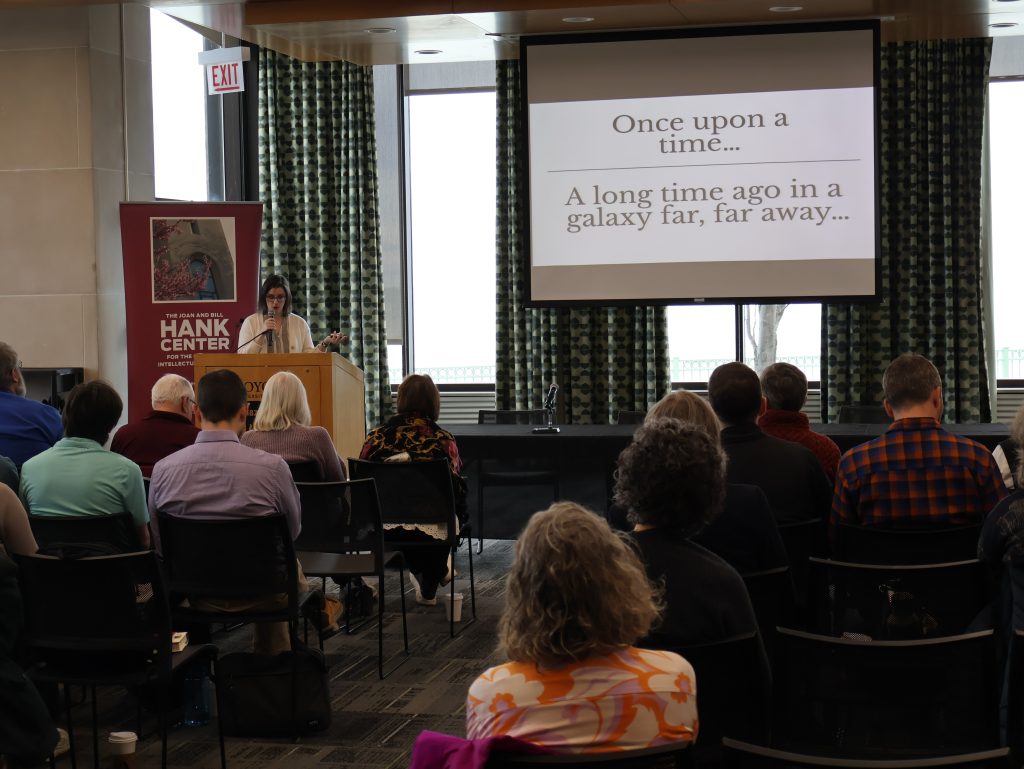
The crowd left the day inspired: reenergized in their own creative and professional work and nourished in their spiritual lives. I asked a few of them to share their own reflections from the conference to give us a fuller understanding of how the Spirit was at work among us — even if in surprising ways. Those insights are below.
Ultimately, I’m reminded of C.S. Lewis’ description of friendship from his classic book “The Four Loves.” He writes that friendship is built upon common interest, a shared passion, something that delights and surprises those would-be friends upon discovery. Friendship occurs when two strangers see something together — and consequently become friends. “What? You too? I thought I was the only one.”[i]
That’s what the day felt like: stumbling into that mutual experience of a-ha! again and again and again. And this is just the beginning.
— Eric Clayton
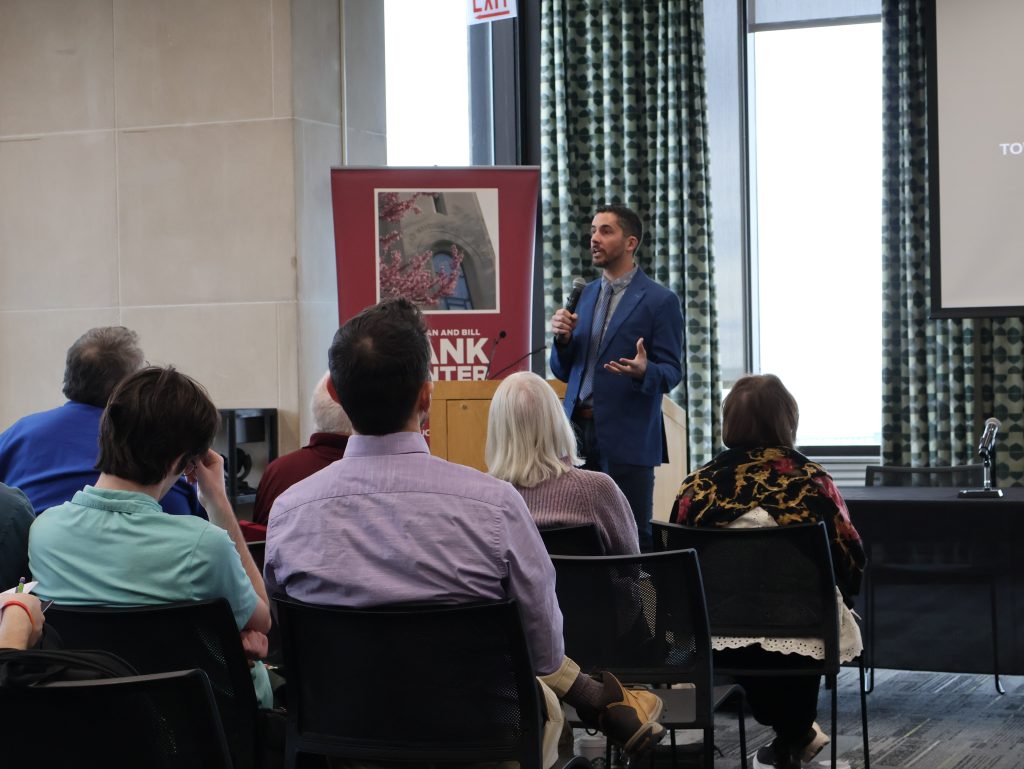
FROM BJ NAPLE
I smiled and cried out “YES!” when this conference was first announced. I’m at one of those life crossroads with my creative work and was looking for a jump start.
“To what can I compare” this conference? I was reminded of two things.
The first is the lyrics to that whimsical Moody Blues song “Nice to Be Here.” I was the one in the tree, watching and listening in delight to the nine presenters, whose symphony of ideas and experiences expressed their sincere faith in God and their utter joy in creating. In a phrase from the that folk-pop song: “They played my kind of rhythm.”
The second thing I was reminded of was “The League of Extraordinary Gentlemen.” What a team these presenters made! Each gave an edge-of-your-seat talk focusing on how their Catholic imaginations manifested such creative genius (of course, their humility kept them from using that phrase). All so different, yet all so unified in expressing their fearless creativity. They answered the call of their God-given imaginations to be confident storytellers for a world hungering for inspiration and joy.
Takeaways? My favorite nuggets:
- Instead of second-guessing your creative effort, get a second opinion (just ask C.S. Lewis).
- The impulse to ask questions can lead us to engage the wonderous.
- Bons mots and zingers: “finding the holy lurking in all things,” “curiosity is trajectory setting,” “let the story breathe,” “imagination inspired empathy,” “start talking to God, NOW!” and many more.
I walked away charged and excited. Turning now to my completed works with courage and commitment in overcoming the slush pile, I’ll also approach the next blank page of a project with delight and joy at the possibilities. Fearless creativity is contagious.
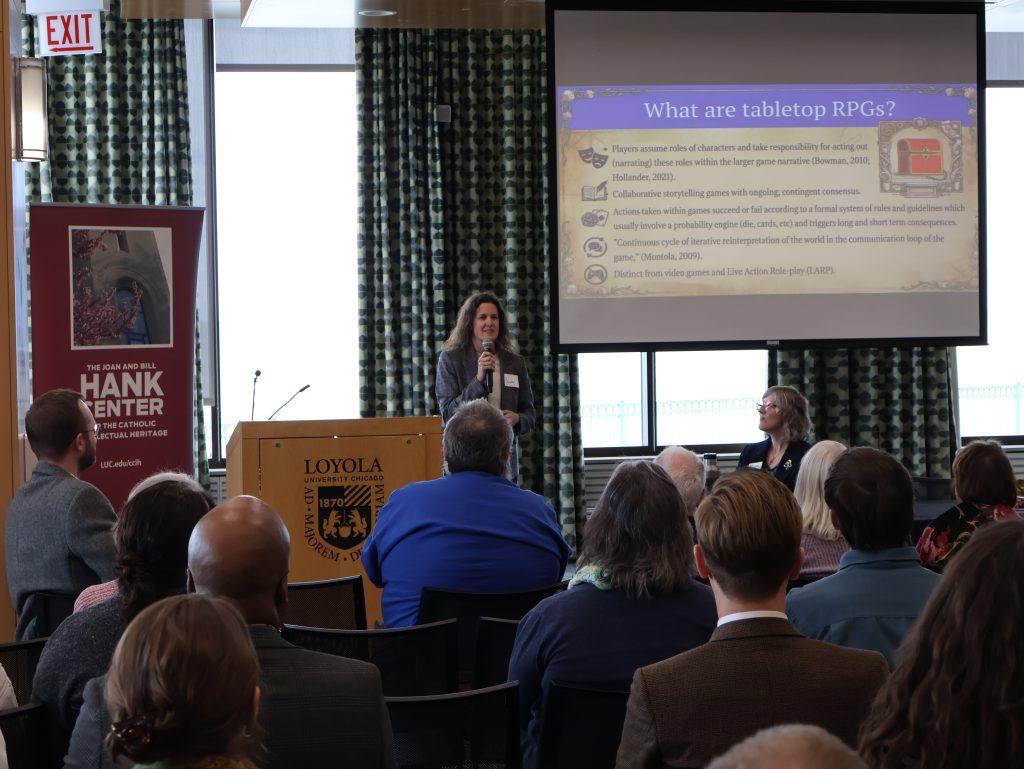
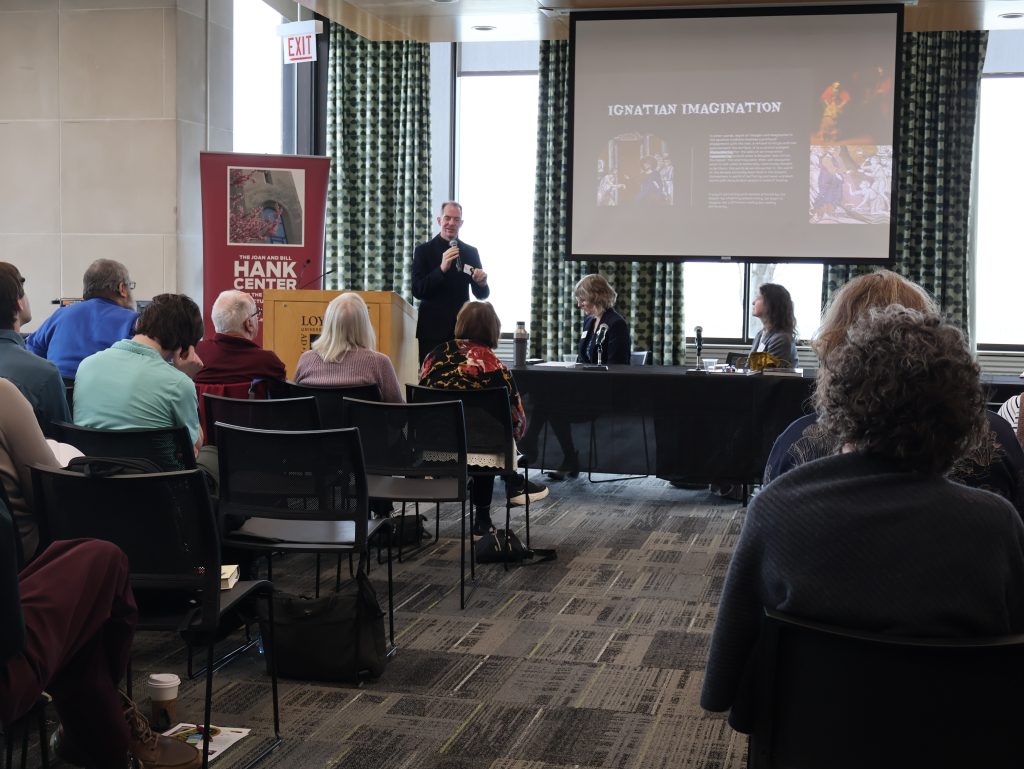
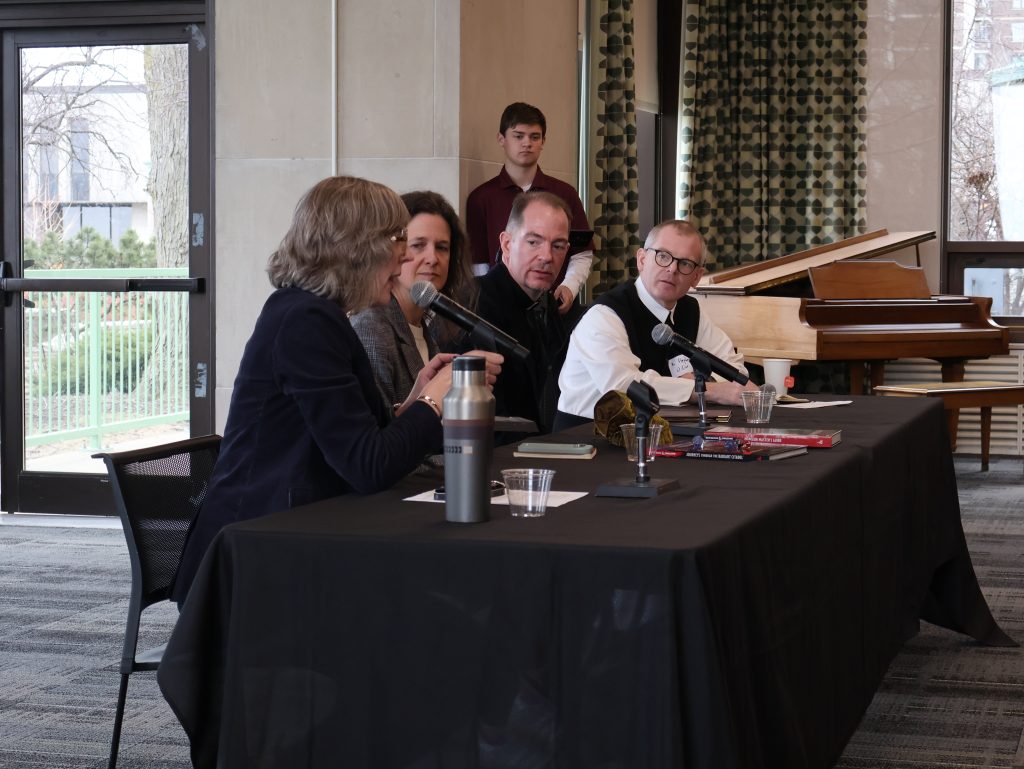
FROM RICHARD SASSO
Once in a while, I find myself at precisely the right place, at the right time with the right people. Such was the seminar “A Faith that Builds World: The Catholic Imagination and Speculative Storytelling.” Assembled were authors, illustrators, theologians, spiritual directors, professors of literature, high-level scientists and Dungeon Masters. The presenters came together to talk about how the Roman Catholic imagination manifested in world-creating ventures — from Dungeon & Dragons games to literature to exploring galaxies.
I found it fascinating that such a diversity of voices still managed to speak to similar themes from the Catholic imagination. The depth and breadth of friendship between J.R.R. Tolkien and C.S. Lewis fascinated me, as illustrated by John Hendrix in his book “The Mythmakers,” and got me thinking about the role friendship plays in both creativity and evangelism — I’m thinking particularly of the beautiful story of the Roman Catholic Tolkien’s gently coaxing Lewis from lukewarm theism to a devout Christianity during a walk in the British countryside.
Rose John Sheffler’s “Past Watchful Dragons” intrigued me with the possibilities of Bible stories retold as fairy tales, showing Lewis’ Narnia books began a tradition of retelling Scripture that still can be mined today. Sheffler showed us her own original handwritten pages with extensive revisions as she created a new world in college-ruled notebooks.
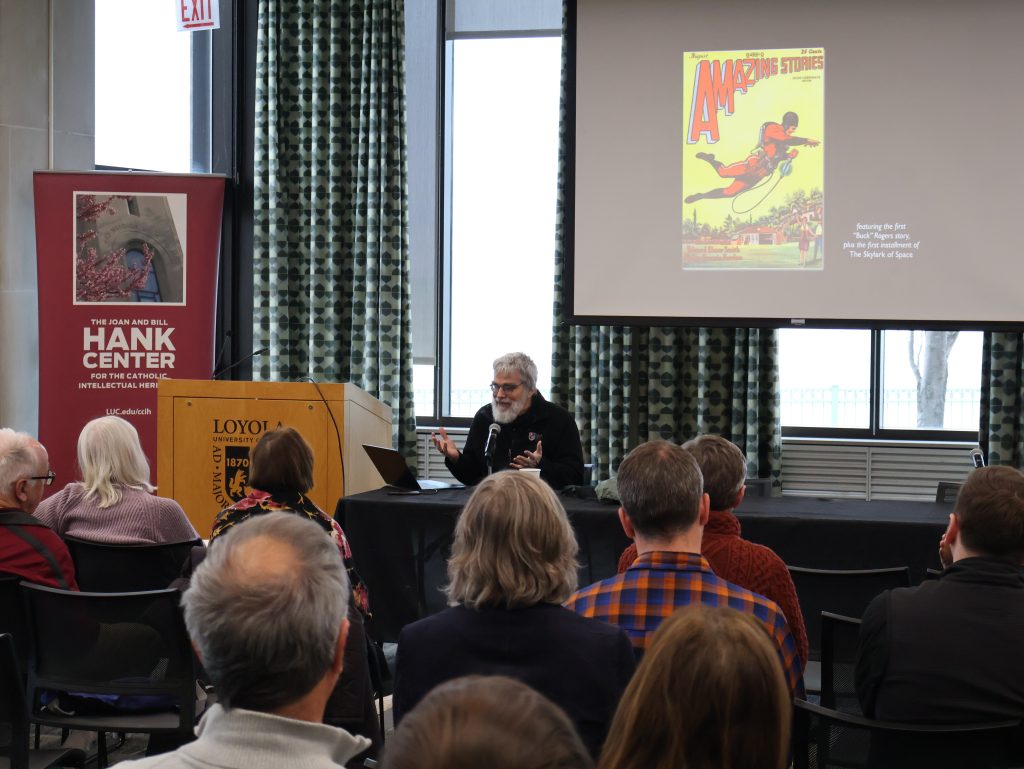
We ended with a tour of the universe by Br. Guy Consolmagno, SJ, former director of the Vatican Observatory, a man at home in the cosmos. His story was one of becoming a scientist because he was introduced to the largest open shelf collection of science fiction at MIT (Massachusetts Institute of Technology) as a young man, ending with his finding God amongst the stars. He finds no contradiction between his faith and science.
God created us in his image, I realized, and we in turn create universes of the imagination, as readers and writers. The heavens are the only limit.
FROM LEAH COMING
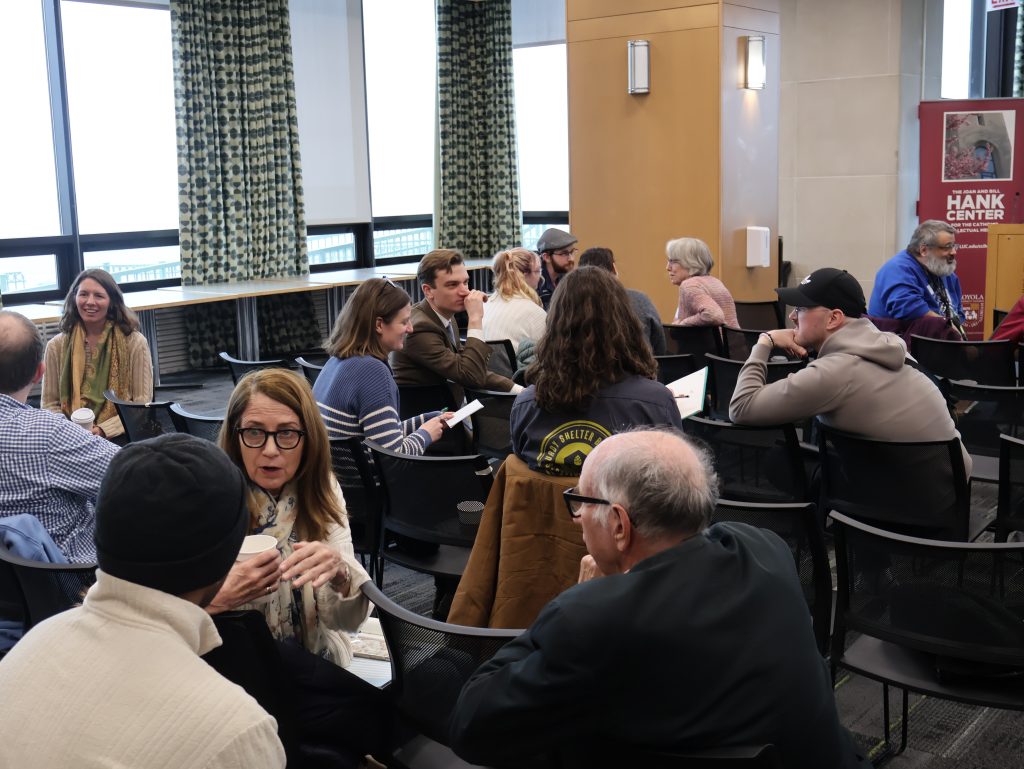
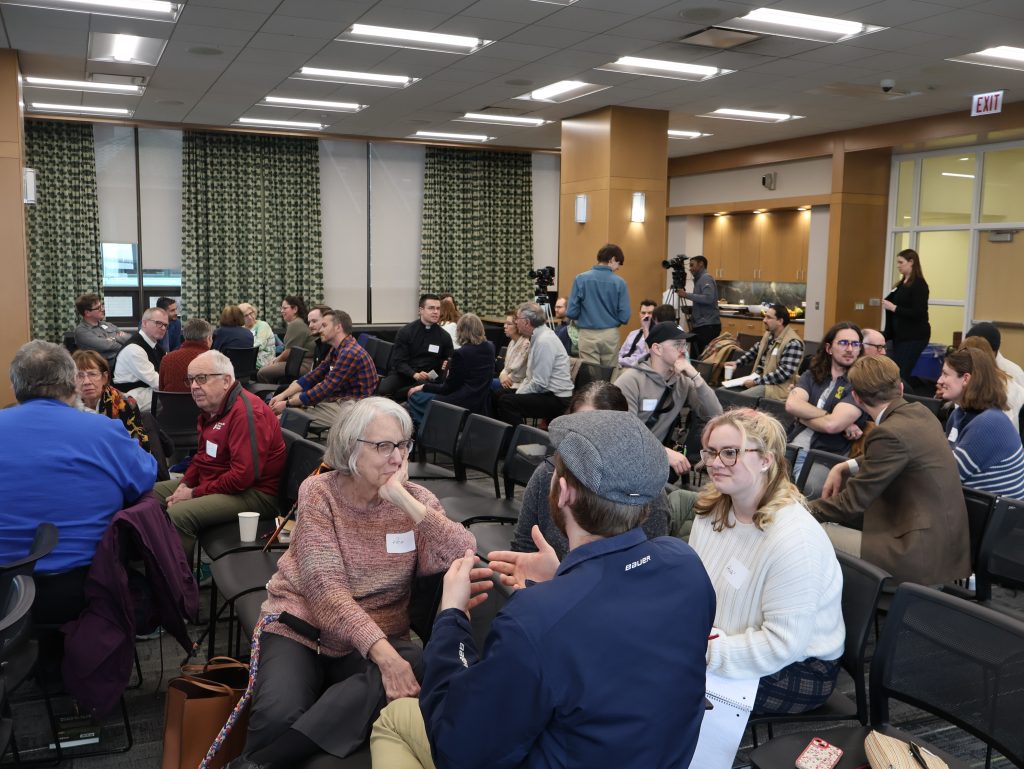
Our “Faith that Builds Worlds” conference was an experience of joy. We played with robot stories, Dungeons & Dragons, horror films, fairy tales, Tolkien’s diary, meteorites… The speakers proclaimed, “God is here!” and conferred immense dignity on what I would call my nerd pastimes.
When I pray with creativity I think of Creator God (think Genesis and the Spirit dancing over the waters), but the speakers offered another spirituality for fantasy/sci-fi worldbuilding: missionary spirit. We can enter the worlds we create as missionaries, expecting to find God there (Eric Clayton). We can enter the worlds others have created as missionaries, sharing good news (Fr. Ryan Duns, SJ, reflecting on his call). Our call to build worlds is an answer to the great commission: Go to every world and announce the good news to every living creature.
I couldn’t stop smiling at this conference. There was a Living Spirit present among the speakers and participants. My prayer is that this community would continue what we started and that anyone reading this who couldn’t attend would still receive the grace of the conference (the freedom of the children of God) in some way.
FROM JOHN TUTTLE
Attending the “Faith that Builds Worlds Conference” was a pretty last-minute decision. It would give me the rare chance of meeting the “Pope’s astronomer,” Br. Guy Consolmagno, SJ, who has also written some science fiction, and Eric Clayton, author of “My Life with the Jedi,” whom I interviewed in 2024. It would also let me hear firsthand from Catholic sci-fi writers about their craft, something an aspiring fiction writer can always learn more about.
It was a treat to hear author/illustrator John Hendrix speak about the relationship shared between Tolkien and Lewis, how this relationship produced the finest fantasy of the last century, and walk us through his splendid book about these two literary behemoths, “The Mythmakers.” He amusingly noted how Tolkien disliked much of what he read, including the novel “2001: A Space Odyssey.” The fact that he had read Arthur C. Clarke came as a surprise.
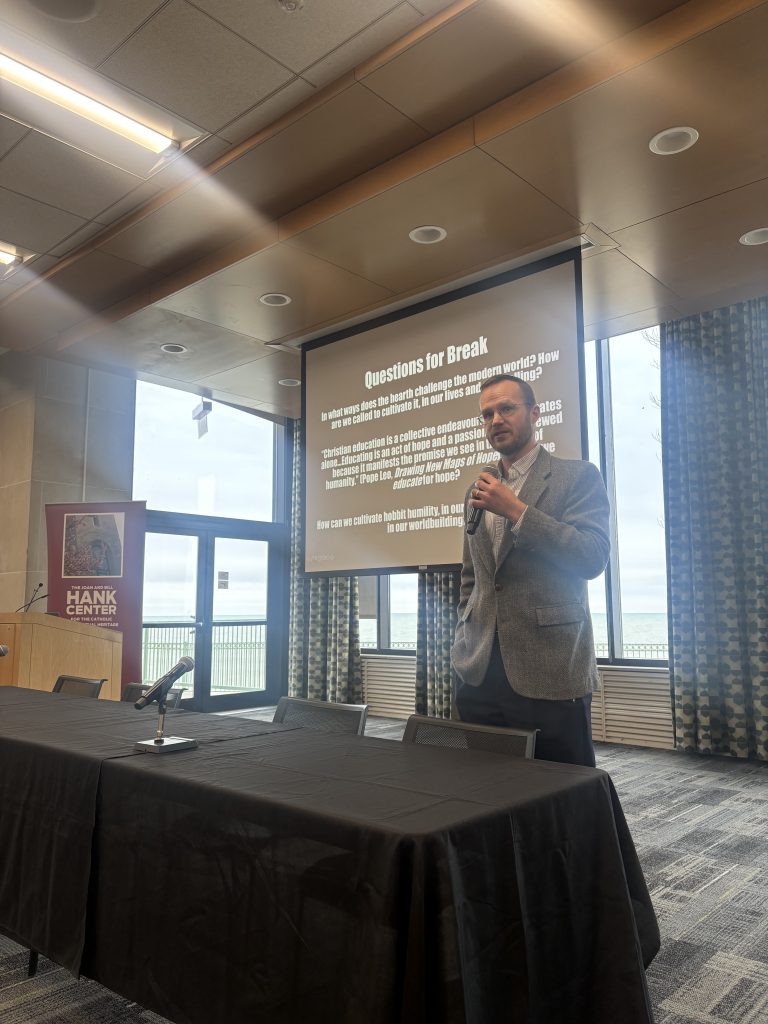
Hendrix’s topic served as a terrific segue into Dr. Joseph Vukov’s guided break, where he used the last paragraph from “The Return of the King” to illustrate how Samwise Gamgee displays the importance of the hearth (or home) and of humility, both of which are important for us as Christians to prioritize. Sam comes home not as the hero of all Middle-earth but as a husband and father. When he arrives, he makes the anticlimactic observation, “Well, I’m back.” This is the peace of a good home and the humility of someone who has done great things. The Hobbits are exemplars of humility. It’s good for creative types, so often caught up in the imago that they sometimes forget to keep an eye on the ego, to hear about this essential virtue.
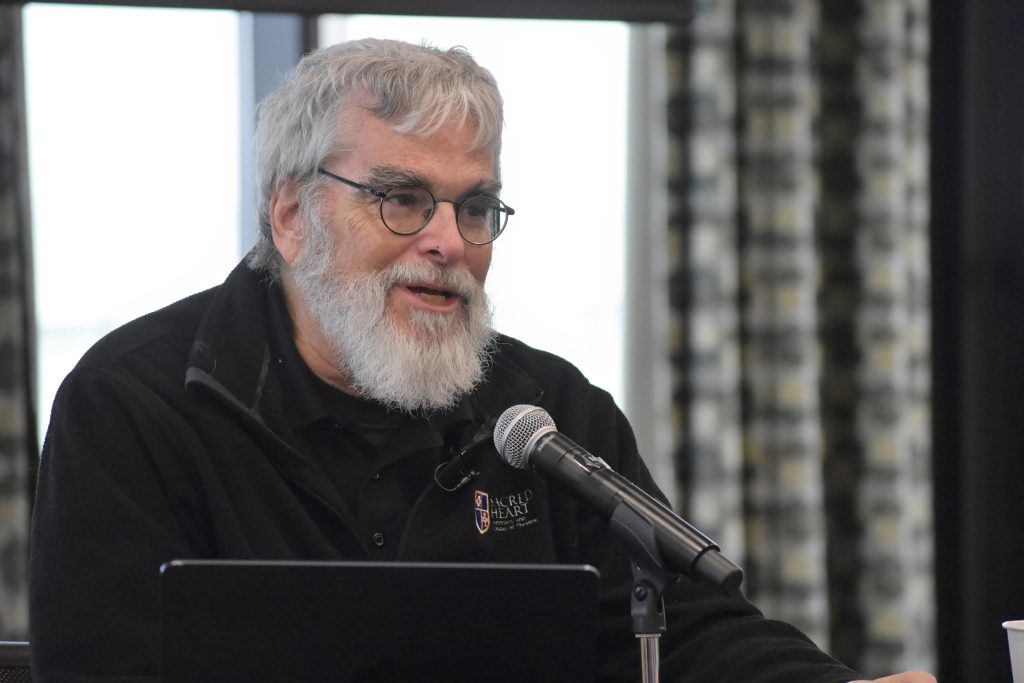
The keynote given by Br. Consolmagno was stellar. For a man who analyzes asteroids and meteorites and the things of the heavens, he’s a pretty down-to-earth guy. His talk revolved around sci-fi and the marks of good storytelling, bringing his own experience and experiments to bear on the topic.
I had the opportunity to walk with the Jesuit scientist from one campus building to another on our way to the reception following his lecture. I posited to him a metaphysical query: “What is beauty?”
A true storyteller at heart, he sought to illustrate it, rather than produce a textbook definition. He related how, in college, he geared up for a 12-hour car ride back home. He went and bought some gooey donuts for the trip. When he returned to his family’s home and entered the kitchen filled with the aromas of his mom’s home cooking, there were only three donuts left in the box, and a wave of nausea came over him. Which food, he asked me, do you think is better? Obviously, the home-cooked meal! Beauty is like that, he told me. When you experience beauty, you feel it. Though it can’t be quantified, you know it when you sense it.
Like Samwise, I made the return journey. I went back to familiar faces and people. In place of Rosy was Ellen, my wife. Instead of little Elanor, there was my own baby, Elizabeth. The next few pages of the legacy passed on to me were mine to write. As Br. Guy put it, we’re all part of a shared universe, of a story on the grandest scale. Together with God, we get to write a chapter of that story. The Vatican astronomer also reminded the audience that the unexpected is bound to occur. I wonder what our chapters in the story will look like…
FROM BRENDAN DILLON
As an aspiring writer, navigating the world of Christian fiction can feel lonely and confusing.
Christian fiction does not have the fan base of subgenres such as “domestic noir” or “romantasy,” nor does it have the instant appeal of television or ever-shorter and flashier smartphone videos. Christian fiction success stories are uncommon, and finding quality guidance in the field is difficult.
Therefore, I was shocked when I saw advertised “A Faith that Builds Worlds: The Catholic Imagination and Speculative Storytelling Conference.” A conference about faith and fiction writing? With accomplished and impressive speakers? And on top of that, it was free?? I had only one thought: “I am going” (No matter that I had one week to arrange travel from Dayton, Ohio, to Chicago and locate Northern-white-rhino-elusive St. Patrick’s-Day-weekend lodging).
Through a combination of frantic planning and divine intervention, I arrived at the conference on Loyola University Chicago’s campus on a windy, frigid morning. I listened to published authors share their inspirations and creative processes. I learned about fascinating and varied subjects: the theology of horror, the friendship between C.S. Lewis and J.R.R. Tolkien, golems in Judaism.
I had the rare opportunity to connect with people like me who are pursuing Christian fiction writing, and I exchanged contact information with friendly and approachable academics and editors. I am now confident that when I am ready to submit a book manuscript, I have contacts who can assist me in the process.
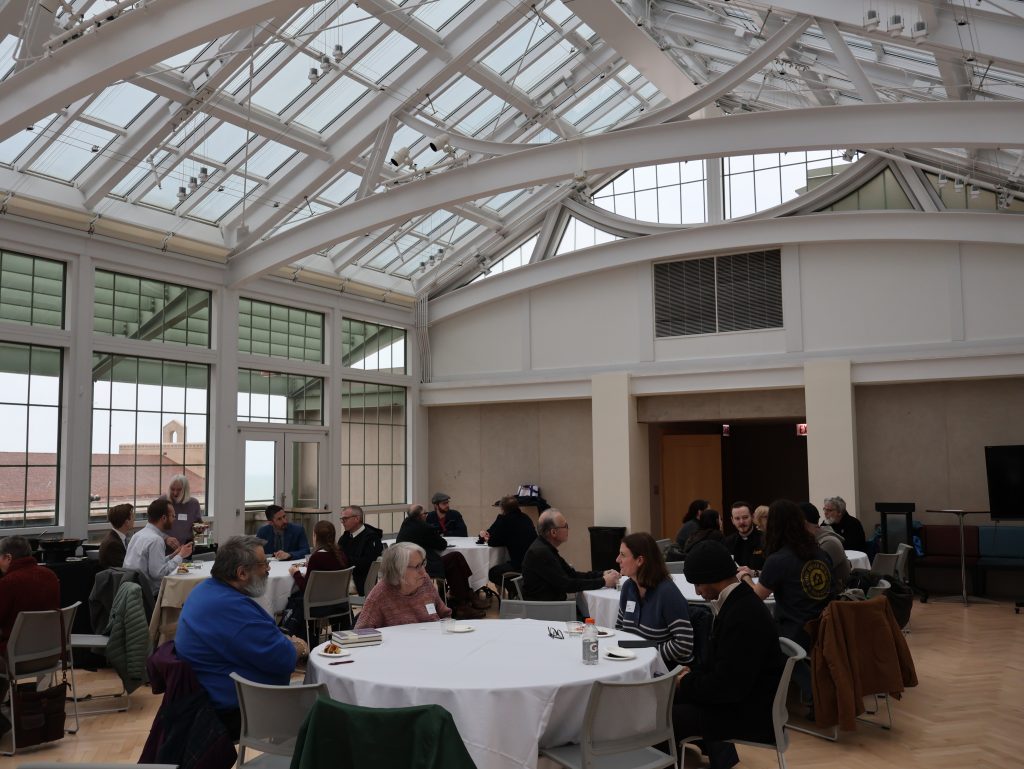
At the closing reception, attendees were treated to, among other delicious appetizers, purple cauliflower. It was unexpected and wonderful, much like the conference. Thank you to the organizers and speakers for orchestrating a purple cauliflower of a conference; we, the attendees, are incredibly grateful!
[i] C.S. Lewis, The Four Loves (Harcourt, 1960), 65.