
Instructors: Sonya S. Cronin, Ph.D. & Carey C. Newman, Ph.D.
January 5, 12, 19, 26 and February 2 – Live on Zoom
7:00-8:30 p.m. ET / 4:00-5:30 p.m. PT
Cost: $50
Max participants: 20
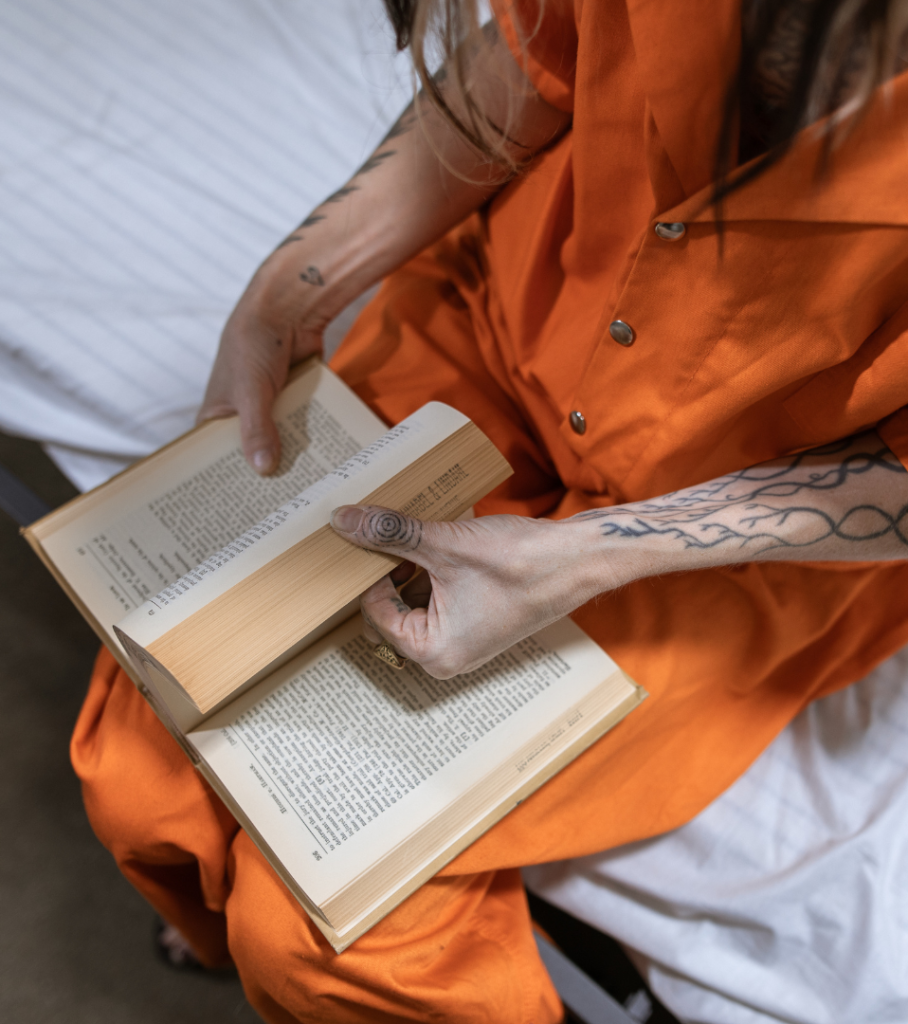
Ignatius of Loyola was confined to his bed when he encountered God through the imagination. It was his imagination, fueled by stories and the working of the Holy Spirit, that fostered a profound transformation in his life, allowing him, from his bed, to reevaluate his past life experiences. Ignatius’ story challenges us to look to those who today are confined to their beds and struggling to find hope, particularly those who are incarcerated. How might new stories fuel their imagination and provide opportunity for transformation?
Enter the Carrier Pigeon Post (CPP). CPP was born from the conviction that story is the native language of hope, and that creativity, faithfully practiced, is an act of justice. That’s why CPP has been printing newspapers full of stories and providing them to 100,000 incarcerated readers in 250 prisons across nine states and two countries for more than a decade. This course will empower you to join in this mission by using CPP as the primary text — not as a case study, but as a teacher. Participants learn by encounter first, by theory second and by design third. They leave equipped to practice public theology in light of Ignatian reflection, wherever they already are.
Through weekly conversation, reading and writing exercises, participants will learn how to turn their creativity to the work of mercy. The course is designed for creators who are hungry to put their craft in service of something that matters. It requires no prior theological formation — only the willingness to encounter, to be changed and to make something beautiful in response. As one incarcerated reader put it: “Your paper is a hope dealer.” This course teaches creators how to deal hope.
At the conclusion of this course, participants will be eligible to write for the Carrier Pigeon Press.
Participants discuss prison conceptually, and they hear and learn of what prison experience is really like. They receive an issue of CPP and read it as if in a prison cell — no framing, no theory, only imagination. What might this paper do? How and why?
Practice: Attentiveness — the Ignatian practice of careful, embodied attention to what is actually there; finding God in the particular and the concrete. Compassion for the other. Thoughtfulness to the physical, psychological, emotional and theological factors at work. Imagine the despair; and imagine what could bring hope to this type of despair?
Reading: CPP and excerpts from Tolkien’s “On Fairy-Stories” — especially subcreation
Participants name what they experienced in week 1, and then consider it in light of the Ignatian idea of being contemplatives in action. What would the prayers for those suffering look like? What would being God’s answer to those prayers look like? By exploring the work of scholars Nida, Venuti, Sanneh and Benjamin and the ancient Christian practice of letter writing, participants discover how to work mercy through the power of story, by means of a type of letter writing.
Practice: Reading and Writing — CPP performs the Ignatian and Pauline practice of the pastoral letter written across distance and difference: “and words became printed paper and dwelt among us.” Participants will contemplate and write informal ideas that they think would act as alms — meeting people where they are.
Reading: Article on translation theory and excerpts from Ignatius’ letters
Participants consider how writing can be a gift of mercy. They imagine what it means to write hope to “the least of these.” They imagine (like Ignatius) how the future can be different and how story can be crafted in such a way as to accompany someone in their suffering — story as presence. They begin to tease the idea of story as incarnation. They imagine ones situation again and consider how sharing one’s suffering can alter the writing to become a gift for rather than instruction to (Deardorff, the U-curve, accompaniment theology). They discover that genuine presence leads inevitably to autobiography — the rescripting of a life story from doom to hope, both for writer and reader.
Practice: Almsgiving and Autobiography — writing for prisoners as sacrificial communal care that transforms both giver and receiver; Augustine’s Confessions practiced in a prison cell.
Reading: CPP’s article “Hope With Wings” and excerpts out of Ignatius’ biography
Participants practice “Yes, And” as a theological posture (Wells, Johnstone, Spolin) and locate CPP on the map of public theology (Niebuhr, Hauerwas, Holland). They discover that improvisation is the posture of incarnation — and of hospitality to those on pilgrimage. This is the notion of C.S. Lewis’ supposal – how the Incarnate Christ becomes what he needs to be for each and every situation and person he encounters. Salvations saves corporately, but individually as well.
Practice: Hospitality and Pilgrimage — accompaniment without redirection; positioning oneself along the pilgrim’s way without needing to know the pilgrim’s name. Participants will consider what they might write in response to the need they see — what their unique contribution of themselves through writing could alleviate another’s suffering. They will consider prison as pilgrimage and accompaniment as grace to the pilgrim.
Reading: Excerpts from articles on public theology, pilgrimage and Ignatius as pilgrim
Participants begin to define public theology in light of what they have learned — corporate works of mercy paired with contemplation on the one side and creativity on the other. Public theology that gives but doesn’t demand back. Public theology that imitates Incarnation in Tolkien’s understanding of Christian imageness as subcreation. Public theology that practices translation, immersion and improvisation to others. Public theology that takes the form of writing story as a work of mercy.
Practice: Public theology — the creative work of almsgiving, the hospitality of the letter (writing story), the pilgrimage of sustained presence through imagination and practice. Participant will write an article for CPP to be published and distributed to 100,000 readers.
Reading: Matthew 25:36-40; Jesus feeding the 5000 and 4000
The Carrier Pigeon Post is a 501(c)(3) nonprofit organization created to restore hope to incarcerated and formerly incarcerated individuals through stories and education.
Each month, The Carrier Pigeon Post publishes and distributes, free of charge, a 4-color, 8-page, hope-filled, newsprint paper. We do so because we believe in the possibilities afforded by narrative-inspired imagination.
The Carrier Pigeon Post encourages cultural competency and teaches cultural literacy. The paper features short, 300-500 word stories, written at a 6th-grade level, specifically crafted and curated for those who have been incarcerated. The articles feature narratives, paintings, sculpture, photography, landmarks, political figures, celebrities, literature, historical events and documents, monuments, multicultural folktales, finance, and science.
The Carrier Pigeon Post is a 501(c)(3) nonprofit organization created to restore hope to incarcerated and formerly incarcerated individuals through stories and education.
Each month, The Carrier Pigeon Post publishes and distributes, free of charge, a 4-color, 8-page, hope-filled, newsprint paper. We do so because we believe in the possibilities afforded by narrative-inspired imagination.
The Carrier Pigeon Post encourages cultural competency and teaches cultural literacy. The paper features short, 300-500 word stories, written at a 6th-grade level, specifically crafted and curated for those who have been incarcerated. The articles feature narratives, paintings, sculpture, photography, landmarks, political figures, celebrities, literature, historical events and documents, monuments, multicultural folktales, finance, and science.If you have any questions about this course, email Eric Clayton at eclayton@jesuits.org.
The Carrier Pigeon Post was born from the conviction that story is the native language of hope, and that creativity, faithfully practiced, is an act of justice. This course uses CPP’s work among 100,000 incarcerated readers in 250 prisons across nine states and two countries as the primary text — not as a case study, but as a teacher. Participants learn by encounter first, by theory second, and by design third. They leave equipped to practice public theology in light of Ignatian reflection, wherever they already are.

Carey C. Newman has spent three decades in academic publishing, most notably as director of Baylor University Press for seventeen years, where he built a modest operation into one of the most respected religion publishers in the country. He has also served as an editor at Westminster John Knox, Brill, and Fortress Press.

A New Testament scholar and public theologian, Sonya S. Cronin has taught in the Department of Religion at Florida State University for two decades — including FSU’s study-abroad programs in London and Florence — and is the author of two academic books, most recently “The Repentance of YHWH” (Fortress Press, 2025).